
 España
Various Valve Pressure Testing Methods – A Valuable Resource!
1. Introduction to Valve Pressure Testing
Valve pressure testing is one of the most critical quality assurance processes in the manufacturing, installation, and maintenance of industrial valves. Whether you are working with ball valves, gate valves, globe valves, butterfly valves, or cryogenic valves, ensuring that each valve can withstand its rated pressure and maintain a tight seal is essential for the safety and reliability of any piping system.
At XDV Valve (Wenzhou Xuanda Import and Export Trading Co., Ltd.), we understand that pressure testing is not just a regulatory requirement - it is a commitment to customer safety and product excellence. This comprehensive guide will walk you through the various valve pressure testing methods, the relevant industry standards, and practical tips for implementing effective testing protocols.
2. Why Valve Pressure Testing Matters
Industrial valves serve as vital control points in pipelines carrying fluids, gases, steam, and corrosive substances across industries ranging from oil and gas to water treatment and chemical processing. A valve failure due to inadequate pressure resistance can lead to catastrophic leaks, explosions, environmental contamination, production downtime, and safety hazards to personnel and nearby communities.
That is why valve pressure testing standards mandated by organizations such as API (American Petroleum Institute), ASME (American Society of Mechanical Engineers), ISO (International Organization for Standardization), and GB (Chinese National Standards) are strictly enforced worldwide.
3. Common Valve Pressure Testing Standards
Before diving into specific testing methods, it is important to understand the governing standards:
| Standard | Scope | Key Application |
|---|---|---|
| API 598 | Valve Inspection and Testing | Oil and Gas Industry |
| ASME B31.3 | Process Piping | Chemical and Petrochemical |
| ISO 15848 | Fugitive Emission Testing | Industrial Valves |
| GB/T 13927 | Industrial Valve Pressure Test | Chinese Market |
| EN 12266-1 | Industrial Valves - Pressure Tests | European Market |
| API 6D | Pipeline Valves Specification | Pipeline Industry |
| MSS SP-61 | Valve Inspection and Testing | General Industrial |
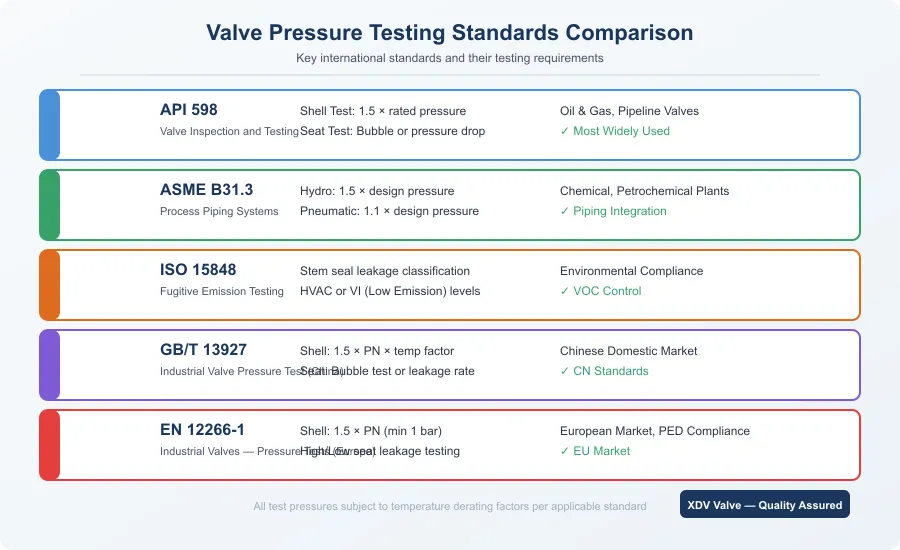
Figure 2: Side-by-side comparison of the five most widely used valve testing standards globally.
4. Hydrostatic Pressure Testing
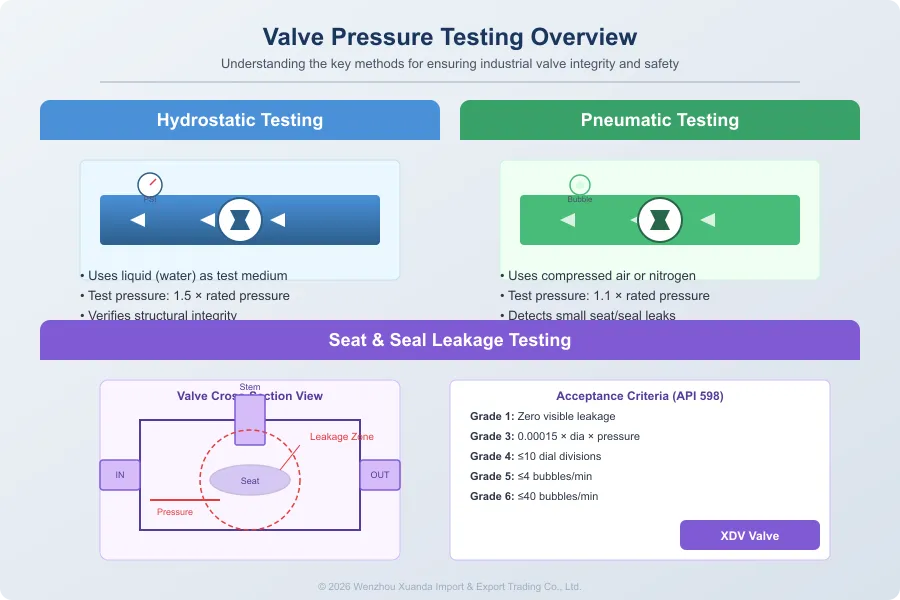
Hydrostatic pressure testing is the most widely used valve pressure testing method. It involves filling the valve with a liquid (typically water) and pressurizing it to a level higher than its rated working pressure to verify structural integrity.
How Hydrostatic Testing Works
- Preparation: The valve is inspected visually and cleaned. End caps are installed, and the valve cavity is filled with test fluid.
- Pressurization: A hydraulic test pump gradually increases the pressure to the specified test pressure.
- Hold Period: The pressure is maintained for a designated dwell time (typically 1-5 minutes for small valves, longer for larger sizes).
- Inspection: The operator checks for external leaks, material deformation, or visible defects.
- Depressurization: Pressure is safely released, and the valve is drained and dried.
Test Pressure Calculation
Test Pressure = 1.5 x Rated Pressure x Temperature Derating Factor
For example, a Class 300 carbon steel valve (rated at 511 psi at ambient temperature) would undergo a shell test at approximately 766.5 psi.
Advantages of Hydrostatic Testing
- High sensitivity to leaks and structural weaknesses
- Visible results - leaks are easy to detect
- Relatively safe - liquids are virtually incompressible
- Cost-effective for most valve sizes and pressures
- Widely accepted by all major standards
Limitations
- Not suitable for valves designed for oxygen service (water contamination risk)
- Requires drying after testing to prevent corrosion
- Cannot test for internal seat leakage directly (requires separate seat test)
- May not be suitable for small-bore valves with tight internal passages
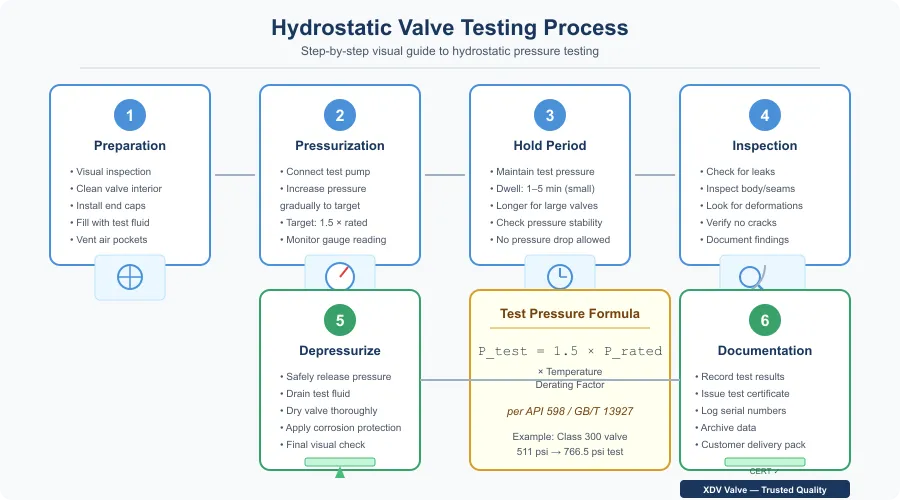
Figure 3: The six-step hydrostatic testing process from preparation through documentation.
5. Pneumatic Pressure Testing
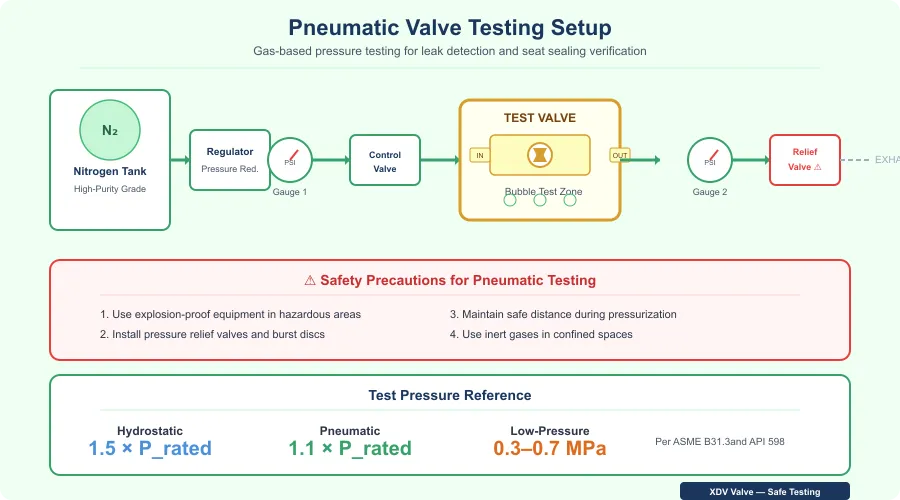
Pneumatic pressure testing uses compressed air or an inert gas (such as nitrogen) as the test medium. This method is particularly useful when water testing is impractical or when detecting very small leaks is critical.
When to Use Pneumatic Testing
- Oxygen-compatible valves where water contamination must be avoided
- Gas service valves where dry operation is required
- Small valves that are difficult to fill and drain
- Low-pressure applications where liquid head pressure would be excessive
- Post-hydrostatic seat testing to verify sealing performance
Pneumatic Test Procedure
- Sealing: Valve ends are capped, and a pressure gauge and gas supply are connected.
- Pressurization: Air or nitrogen is introduced at a controlled rate to the test pressure.
- Soap Bubble Test: A soap solution is applied to joints, seals, and body seams to detect visible leaks.
- Pressure Drop Test: The valve is isolated, and the pressure gauge is monitored for drops over a specified period.
- Acceptance Criteria: Pressure drop must remain within the limits defined by the applicable standard.
Test Pressure for Pneumatic Testing
Pneumatic Test Pressure = 1.1 x Rated Pressure (per ASME B31.3)
6. Seat and Seal Leakage Testing
While shell testing verifies the valve body structural integrity, seat and seal leakage testing focuses on the internal sealing performance of the valve - the most critical functional requirement.
Seat Leakage Testing
The seat test evaluates whether the valve can prevent flow when fully closed. This is performed by closing the valve completely, applying test pressure to the upstream side, measuring the leakage rate through the seat area, and comparing against allowable leakage rates specified by the standard.
Allowable Leakage Rates (per API 598)
| Test Level | Allowable Leakage |
|---|---|
| Shell Test | No visible leakage |
| Seat Test - Grade 1 | 0 (zero) |
| Seat Test - Grade 3 | 0.00015 x rated diameter x test pressure |
| Seat Test - Grade 4 | Up to 10 dial divisions on bubble counter |
| Seat Test - Grade 5 | Up to 4 bubbles per minute |
| Seat Test - Grade 6 | Up to 40 bubbles per minute |
Backseat Testing
Some valves (particularly globe valves and gate valves) feature a backseat design that allows the stem packing to be tested while the valve is in service.
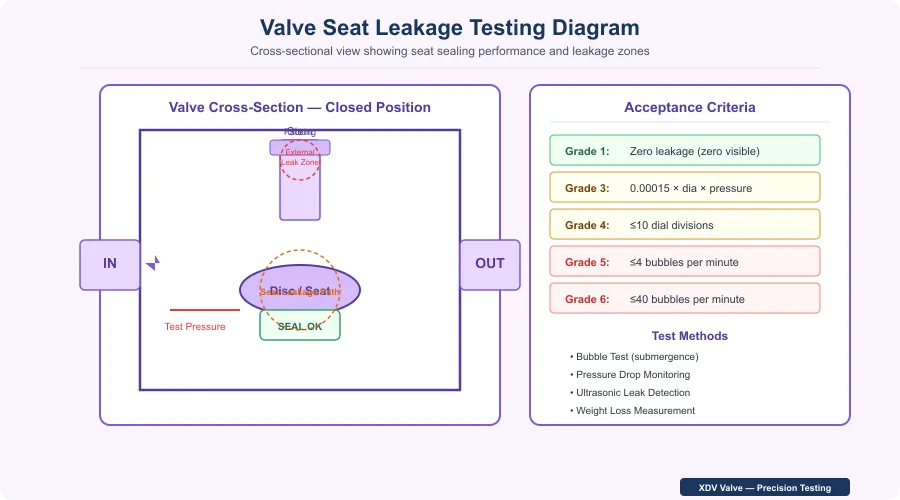
Figure 5: Cross-sectional view of a valve showing seat leakage testing zones and API 598 acceptance criteria grades.
7. Low-Pressure Tight Testing (Pneumatic Seat Test)
Low-pressure tight testing is a specialized variant of seat leakage testing that uses low-pressure air (typically 0.3-0.5 MPa for small valves, up to 0.7 MPa for larger sizes) to detect seat leakage without the risks associated with high-pressure gas testing.
Advantages
- Safer than high-pressure pneumatic testing
- Quick and efficient for production-line testing
- Effective for detecting seat leakage in most valve types
- Compatible with automated testing equipment
8. Combination Testing: Hydro-Pneumatic Methods
For comprehensive quality assurance, many manufacturers perform combination testing that integrates both hydrostatic and pneumatic methods:
- Hydrostatic Shell Test - Verifies body strength
- Hydrostatic Seat Test - Verifies seat sealing with liquid
- Pneumatic Low-Pressure Tight Test - Verifies seat sealing with gas
- Performance Test - Verifies torque, cycle count, and operational characteristics
This multi-stage approach ensures that every aspect of valve performance meets the required standards. At XDV Valve, our quality control laboratory follows this comprehensive testing protocol for every batch of valves produced.
9. Choosing the Right Testing Method
Selecting the appropriate valve pressure testing method depends on several factors:
| Factor | Consideration | Recommended Method |
|---|---|---|
| Valve Type | Ball, gate, globe, butterfly, check | Per applicable standard |
| Service Medium | Water, gas, corrosive, oxygen | Hydrostatic / Pneumatic |
| Pressure Rating | Low, Medium, High | Adjust test pressure accordingly |
| Size | DN15 to DN1200 | Equipment capacity match |
| Industry | Oil and gas, chemical, power, water | API 598 / ISO 15848 / GB/T |
| Temperature | Cryogenic, ambient, elevated | Material-specific testing |
| Certification | PED, CE, UL, FM | Standard-specific protocol |
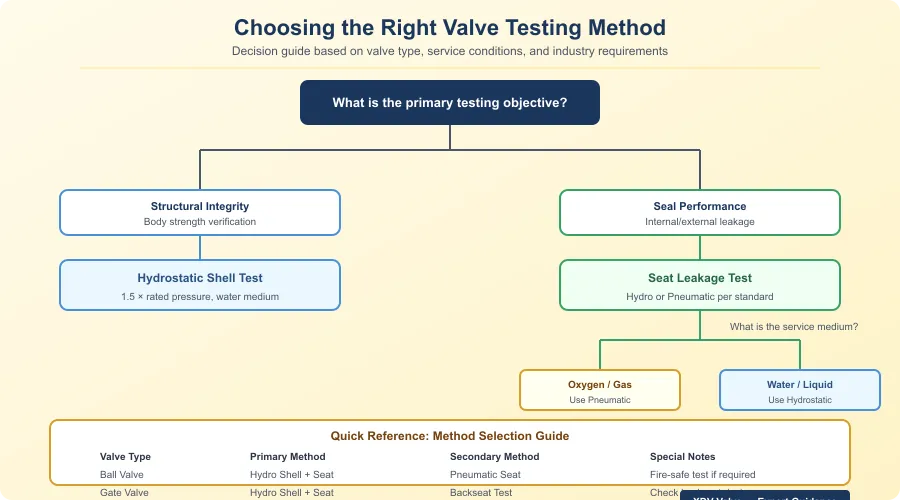
Figure 6: Decision flowchart for selecting the appropriate valve testing method based on application requirements.
10. Best Practices for Valve Pressure Testing
1. Calibration and Maintenance
- Ensure all pressure gauges, transducers, and test pumps are calibrated according to schedule
- Maintain testing equipment in accordance with manufacturer recommendations
- Use reference standards traceable to national metrology institutes
2. Environmental Conditions
- Conduct testing at ambient temperature (typically 10-50 degrees C) unless otherwise specified
- Protect test setups from direct sunlight and wind that could affect readings
- Monitor and record temperature during testing, as it affects pressure readings
3. Documentation and Traceability
- Record test results for every valve, including serial number, test pressure, duration, and inspector
- Maintain test certificates for customer delivery and regulatory compliance
- Use digital testing systems for automated data logging and report generation
4. Safety Protocols
- Always wear personal protective equipment (PPE) during testing
- Establish exclusion zones around high-pressure test stands
- Implement emergency depressurization procedures
- Conduct regular safety drills for testing personnel
5. Post-Testing Procedures
- Thoroughly drain and dry valves after hydrostatic testing
- Apply corrosion inhibitors or protective coatings as required
- Repack or replace seals if the valve has been disassembled for testing
- Perform a final visual inspection before packaging and shipment
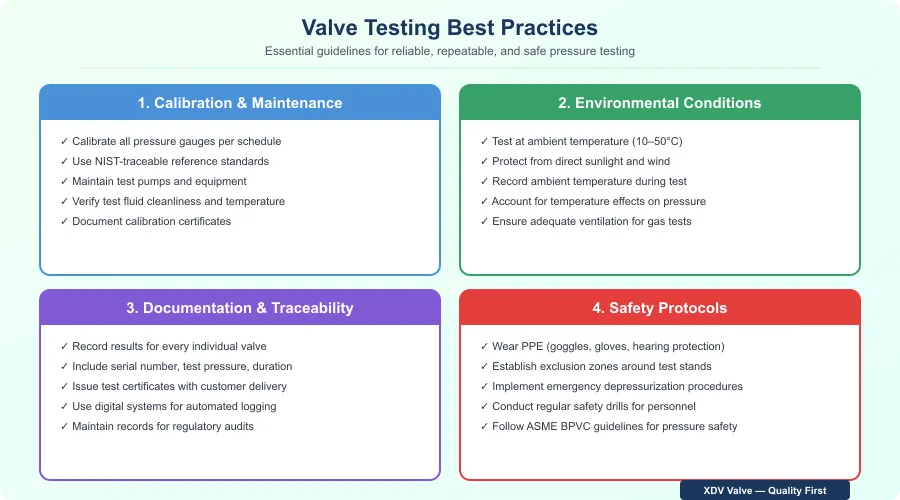
Figure 7: Five essential best practice categories for reliable valve pressure testing.
11. XDV Valve: Committed to Quality
At XDV Valve (Wenzhou Xuanda Import and Export Trading Co., Ltd.), we take valve pressure testing seriously. Our state-of-the-art testing facility is equipped with:
- Hydrostatic test benches covering pressures up to 600 bar
- Pneumatic test stations for seat and seal leakage verification
- Automated testing systems with digital data recording
- Cryogenic testing capability for low-temperature valve certification
- Skilled quality engineers with decades of combined experience
Every valve we manufacture - whether a ball valve, butterfly valve, gate valve, globe valve, check valve, or cryogenic valve - undergoes rigorous pressure testing according to international standards including API 598, ISO 15848, GB/T 13927, and customer-specific requirements.
Need Reliable Industrial Valves?
Get a free quote from XDV Valve - ISO-certified manufacturer serving clients worldwide.
Email Us for a Quote12. FAQ: Frequently Asked Questions
Hydrostatic testing uses liquid (usually water) as the test medium and is primarily used to verify the structural integrity of the valve body. Pneumatic testing uses compressed air or gas and is typically used for seat leakage testing or when liquid testing is not suitable (e.g., oxygen service). Hydrostatic testing is generally safer because liquids are incompressible, while pneumatic testing carries higher energy storage risks.
New valves should be tested before shipment per manufacturing standards. In-service valves should be tested according to the facility inspection and maintenance schedule, typically every 3-5 years for critical service, or as required by regulations such as OSHA PSM or PED directives.
For a Class 150 carbon steel valve with a rated pressure of 150 psi at ambient temperature, the hydrostatic shell test pressure per API 598 would be approximately 275 psi (1.5 x 150 x temperature derating factor). Always consult the applicable standard for the exact calculation.
Yes. Nitrogen is commonly used for oxygen-compatible systems or where moisture content must be minimized. Argon or other inert gases may be used for highly reactive service applications. The choice of test gas depends on the valve intended service and customer specifications.
Fugitive emission testing (per ISO 15848) evaluates the potential for leaks from valve stem seals and other external sealing points during repeated operation cycles. This is particularly important for environmental compliance in the petrochemical and gas transmission industries, where volatile organic compound (VOC) emissions are strictly regulated.
XDV Valve employs a multi-layer quality assurance process: incoming material inspection, in-process testing, final pressure testing per international standards, third-party certification (where required), and comprehensive documentation including test certificates and material traceability reports.
13. Conclusion
Valve pressure testing is an indispensable part of ensuring the safety, reliability, and compliance of industrial valve products. From hydrostatic shell tests to pneumatic seat leakage tests, each method serves a unique purpose in validating different aspects of valve performance.
Understanding the various testing methods, the applicable standards, and the factors that influence method selection enables engineers, procurement specialists, and quality professionals to make informed decisions about valve testing protocols.
At XDV Valve, we remain dedicated to providing not only high-quality valves but also the technical expertise and testing transparency that our global customers deserve.
Contact our team today at sales@xuanda.com for valve testing guidance or product inquiries.
