
 España
Introduction to Valves Used in the Chemical Industry
1. Introduction: The Critical Role of Valves in Chemical Processing
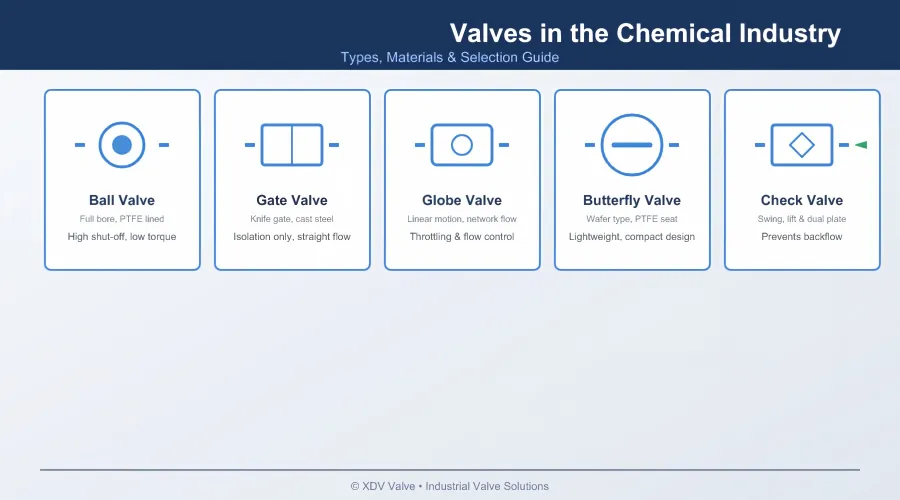
The chemical industry is one of the most demanding sectors for valve technology. From handling highly corrosive acids and toxic gases to managing extreme temperatures and pressures, valves used in the chemical industry play a vital role in ensuring safety, reliability, and operational efficiency throughout chemical processing plants.
Chemical plants process a wide variety of substances, including petrochemicals, polymers, fertilizers, pharmaceuticals, and specialty chemicals, each with unique properties that require careful valve selection. An improperly specified valve can lead to catastrophic leaks, environmental contamination, equipment damage, or even explosions.
| "In the chemical industry, valve selection is not just an engineering decision - it is a safety imperative. Every valve must be matched to the specific chemical, pressure, temperature, and regulatory requirements of the application." |
At XDV Valve (Wenzhou Xuanda Import and Export Trading Co., Ltd.), we specialize in manufacturing and supplying a comprehensive range of valves designed for the most challenging chemical industry applications. Our product portfolio includes ball valves, gate valves, globe valves, butterfly valves, check valves, lined valves, bellow seal valves, and specialty chemical valves.
2. Major Types of Valves Used in the Chemical Industry
The chemical industry relies on several types of valves, each serving specific functions in process control, isolation, and safety. Understanding the strengths and applications of each valve type is essential for engineers and procurement specialists.
2.1 Chemical Ball Valves
Ball valves are among the most widely used valve types in the chemical industry due to their reliable shut-off capability, compact design, and excellent sealing performance. A ball valve uses a hollow, pivoting ball as its closure element, which rotates 90 degrees to open or close the flow path.
In chemical applications, ball valves offer several key advantages:
- Quarter-turn operation for fast shut-off and emergency isolation
- Full bore design allows unrestricted flow with minimal pressure drop
- Double block and bleed (DBB) capability for enhanced safety
- Excellent sealing with PTFE, PFA, or metal-seated designs
- Corrosion-resistant materials including 316L stainless steel, duplex, and lined versions
- Low torque operation suitable for automated actuation
Chemical ball valves are commonly used for on/off control of acids, alkalis, solvents, and gaseous chemicals. They are particularly effective in applications requiring frequent cycling and tight shutoff. XDV Valve offers both standard and PTFE-lined ball valves specifically designed for aggressive chemical services.
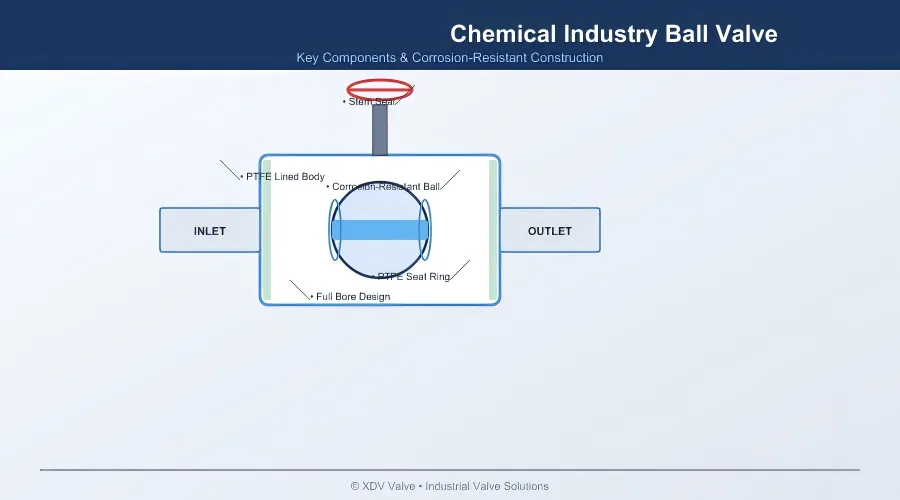
Figure 1: Chemical-grade ball valve with PTFE lining for corrosive media isolation
2.2 Chemical Gate Valves
Gate valves are isolation valves that use a sliding gate or wedge to control flow. When fully open, the gate retracts completely from the flow path, providing minimal flow resistance. In the chemical industry, gate valves are primarily used for straight-on or straight-off flow control rather than throttling.
Key characteristics of chemical gate valves include:
- Zero pressure drop when fully open due to straight-through flow path
- Robust construction suitable for high-pressure chemical services
- Wide size range from small bore to large diameter pipelines
- Multiple gate designs including solid wedge, flexible wedge, and split wedge
- Special coatings and linings for corrosive chemical protection
Gate valves are extensively used in chemical plants for main line isolation, pipeline segmentation, and bulk chemical transfer. They are available in various materials including carbon steel, stainless steel (304/316/316L), duplex stainless steel, and rubber-lined or PTFE-lined versions for highly corrosive environments.
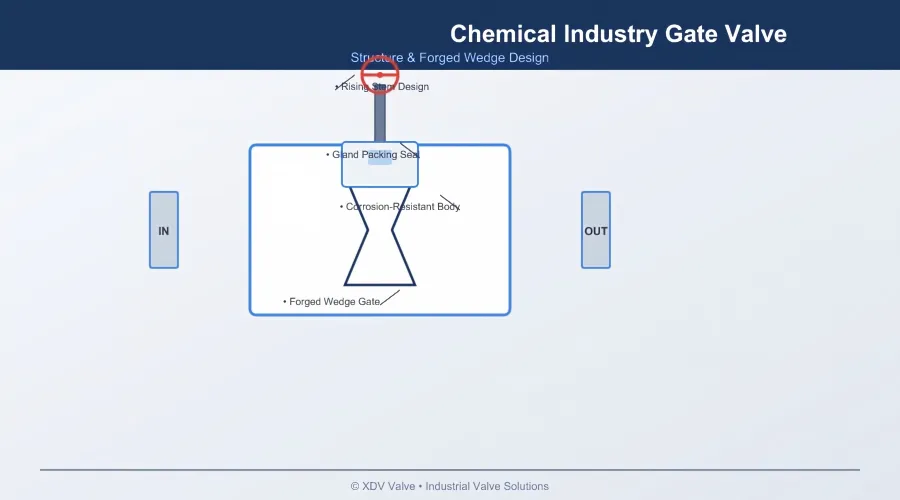
Figure 2: Chemical-grade gate valve for high-pressure isolation services
2.3 Chemical Globe Valves
Globe valves are renowned for their excellent flow control and throttling capabilities, making them indispensable in chemical processing applications where precise flow regulation is critical. Unlike ball or gate valves, globe valves use a movable disk/plug and a stationary seat to regulate flow through a tortuous path.
Advantages of chemical globe valves:
- Precise flow throttling and regulation capabilities
- Excellent shut-off with hard or soft seating options
- Good wear resistance in abrasive chemical slurries
- Multiple bonnet designs including bellows seal for toxic media
- Wide temperature range suitability for hot and cold chemical services
In chemical plants, globe valves are commonly deployed for dosing systems, reactor feed control, heat exchanger bypass regulation, and precision flow management. The bellows seal globe valve variant is particularly important for handling toxic, flammable, or environmentally hazardous chemicals where stem leakage must be eliminated.
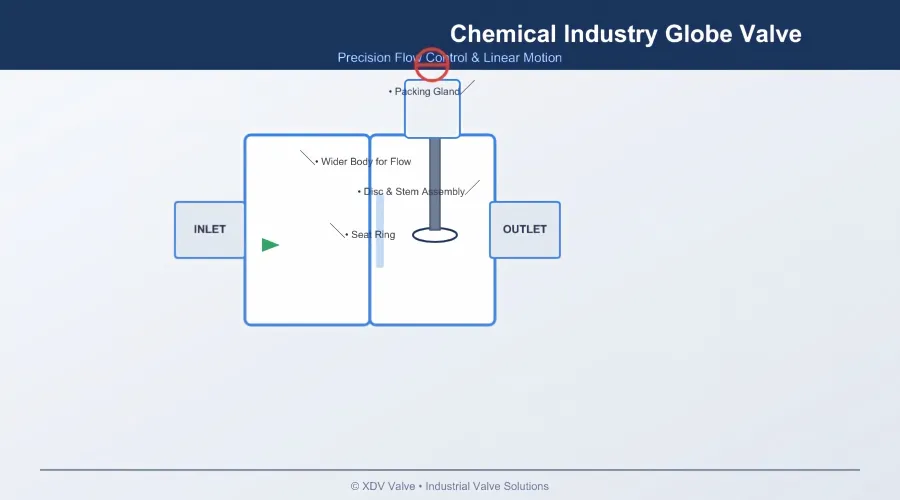
Figure 3: Chemical globe valve for precision flow control in processing systems
2.4 Chemical Butterfly Valves
Butterfly valves utilize a rotating disc mounted on a shaft to control flow. They are lightweight, compact, and cost-effective, making them increasingly popular in large-diameter chemical piping systems. Modern chemical butterfly valves feature high-performance PTFE or PFA seats and corrosion-resistant disc materials.
Benefits of butterfly valves in chemical applications:
- Lightweight and compact design reduces pipeline weight and support requirements
- Cost-effective for large diameter pipes (DN100-DN3000 )
- Quick quarter-turn operation for fast isolation
- Good throttling capability with segmented or eccentric disc designs
- Available in lined and unlined versions for diverse chemical compatibility
Chemical butterfly valves are widely used for bulk chemical handling, water treatment in chemical plants, cooling systems, and large-diameter process lines. High-performance double-offset and triple-offset butterfly valves provide enhanced sealing for demanding chemical services.
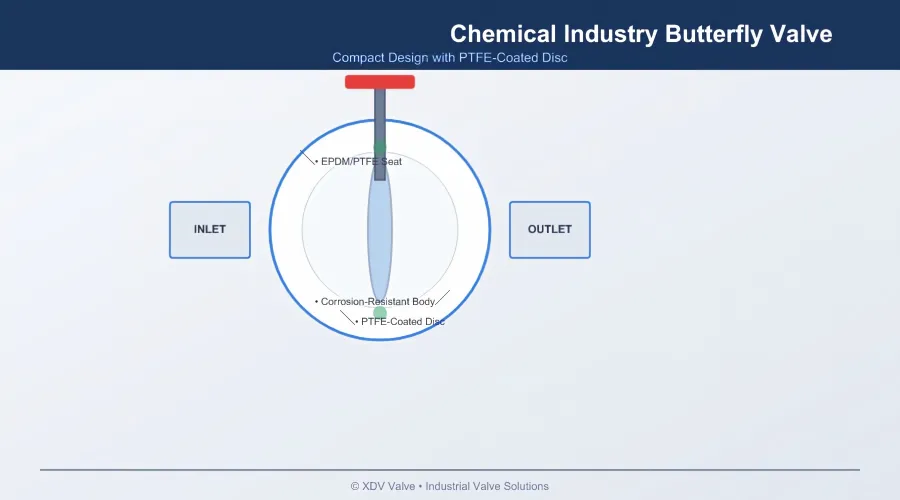
Figure 4: High-performance chemical butterfly valve for large-diameter piping
2.5 Chemical Check Valves
Check valves (non-return valves) automatically prevent reverse flow in chemical pipelines, protecting equipment and maintaining process integrity. They open with forward flow and close automatically when flow reverses, eliminating the need for external actuation.
Types of check valves used in chemical industry:
- Swing check valves - for large flow rates and low pressure drop
- Lift check valves - for precise closing and tight shutoff
- Dual plate check valves - compact design with fast response
- Ball check valves - for small bore and high-pressure services
- No-dome check valves - zero pressure drop design
Check valves are critical in chemical plants for protecting pumps and compressors from reverse flow, preventing product mixing in shared pipelines, and maintaining proper flow direction in reactor systems. Chemical-compatible materials and seating options ensure reliable operation with aggressive media.
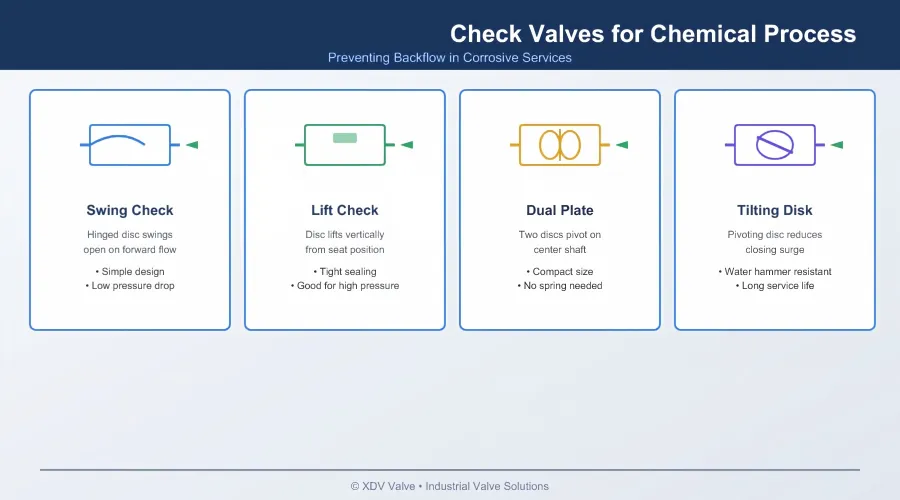
Figure 5: Chemical check valve types for reverse flow prevention
3. Valve Material Selection for Chemical Applications
Selecting the right valve materials for chemical service is one of the most critical aspects of valve engineering. The chosen materials must resist corrosion, erosion, and chemical attack from the processed media while maintaining mechanical integrity under operating pressure and temperature conditions.
3.1 Valve Body Materials
| Material | Chemical Resistance | Temperature Range | Typical Applications |
|---|---|---|---|
| Carbon Steel (WCB) | Good for neutral chemicals | -29 to 425 deg C | General chemical services, hydrocarbons |
| SS 304/304L | Excellent for oxidizing acids | -196 to 800 deg C | Organic chemicals, nitric acid |
| SS 316/316L | Superior chloride resistance | -196 to 800 deg C | Sulfuric acid, phosphoric acid, seawater |
| Duplex SS (2205) | Excellent pitting/crevice corrosion | -50 to 300 deg C | Chloride services, offshore chemical |
| Super Duplex (2507) | Outstanding corrosion resistance | -50 to 300 deg C | Aggressive chemical environments |
| PTFE-lined CS | Excellent for almost all chemicals | -196 to 180 deg C | Strong acids, caustics, solvents |
| Titanium (GR2/GR5) | Excellent for chlorides, oxidizers | -200 to 300 deg C | Chlorine, hypochlorite, organic acids |
| Hastelloy C276 | Exceptional for reducing acids | -200 to 400 deg C | HCl, H2SO4, mixed acid services |
| Inconel 625 | Excellent for oxidizing media | -200 to 700 deg C | Hot concentrated caustics, seawater |
3.2 Seal and Seat Materials
The sealing materials in chemical valves are equally critical as the body materials. Common seal/seat materials include:
- PTFE (Teflon) - Universal chemical resistance, -200 to 200 deg C
- PFA - Superior to PTFE for molded parts, similar chemical resistance
- ETFE - Good for harsh chemical environments at elevated temperatures
- Viton (FKM) - Excellent for oils, fuels, and organic solvents
- EPDM - Best for hot water, steam, and alkaline solutions
- NBR (Nitrile) - Suitable for petroleum-based chemicals and oils
- Graphite - High-temperature metal seat sealing up to 650 deg C
3.3 Lining Technology for Corrosive Services
Chemical lined valves combine the strength and cost-effectiveness of carbon steel bodies with the corrosion resistance of fluoropolymer linings. XDV Valve specializes in advanced lining technologies:
- PTFE lined valves - Compression-molded lining for excellent chemical resistance
- PFA lined valves - Transparent lining allowing visual inspection, superior for high-purity services
- ETFE lined valves - Enhanced temperature capability beyond PTFE
- Rubber lined valves - Excellent for abrasive slurries and certain chemical services
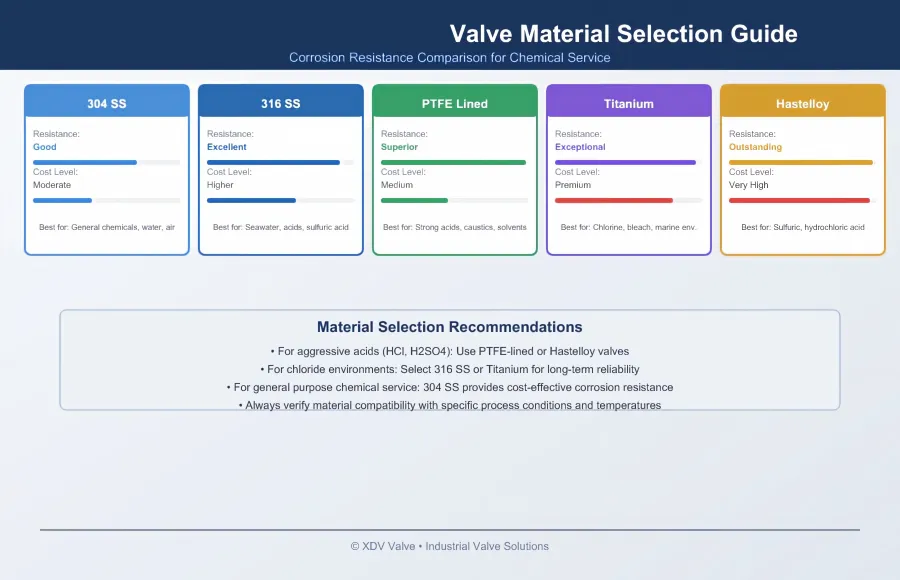
Figure 6: Chemical valve material selection guide for optimal corrosion resistance
4. Special Valves for Unique Chemical Industry Challenges
Beyond standard valve types, the chemical industry requires specialized valve solutions for handling extremely corrosive, toxic, or hazardous media under extreme conditions.
4.1 Bellow Seal Valves
Bellows seal valves are specifically designed for handling toxic, flammable, odorous, or environmentally hazardous chemicals. The bellows provides a permanent, leak-free seal around the valve stem, eliminating the most common source of valve emissions in chemical plants.
Key applications include:
- Mercury-containing chemical processes
- Phosgene and cyanide handling
- Volatile organic compounds (VOCs)
- H2S and other toxic gas services
- High-purity chemical transfer
Bellows seal valves comply with ISO 15848 (low emission valve standards) and EPA Method 21 requirements for fugitive emissions in chemical facilities.
4.2 Specialty Chemical Valves
For extremely demanding chemical applications, specialty valves provide enhanced performance:
- Multihole downcomer PTFE-lined valves - For ultra-corrosive acid services
- Welded PFA-lined valves - For high-purity semiconductor chemicals
- Cryogenic chemical valves - For low-temperature chemical processing
- Slurry valves - For abrasive chemical suspensions and catalyst handling
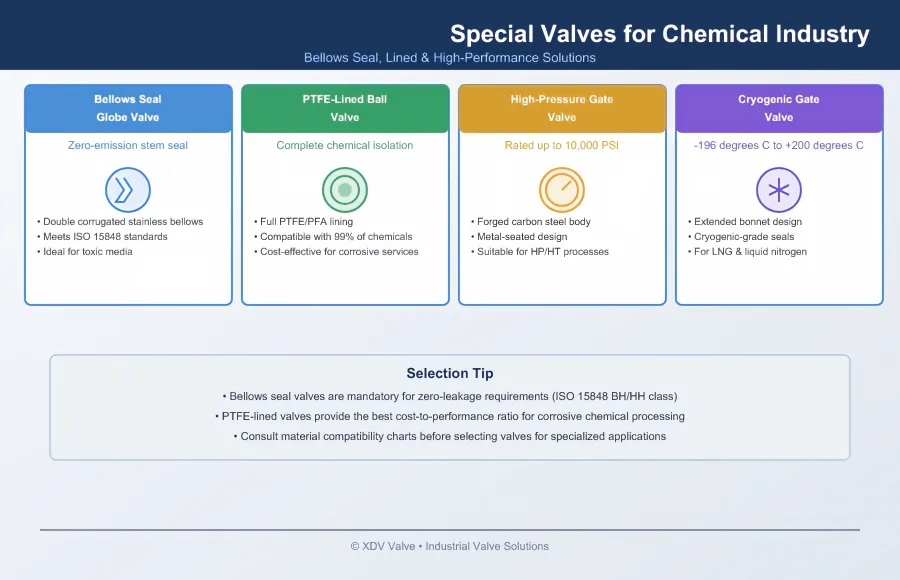
Figure 7: Specialty chemical valves for extreme service conditions
5. How to Select the Right Valve for Chemical Applications
Choosing the correct valve for a chemical application requires careful consideration of multiple factors. Here is a systematic approach to chemical valve selection:
5.1 Key Selection Factors
- Chemical compatibility - Verify that all wetted materials resist the process chemical at operating conditions
- Operating pressure and temperature - Select valves rated for the full range of process conditions
- Flow characteristics - Determine if on/off, throttling, or precise control is required
- Leakage requirements - Assess allowable leakage per ANSI/FCI 70-2 or ISO 15848 standards
- Safety regulations - Ensure compliance with API, ASME, PED, and industry-specific standards
- Maintenance accessibility - Consider online repair capability and spare parts availability
- Actuation requirements - Evaluate need for manual, pneumatic, hydraulic, or electric actuation
5.2 Valve Type Selection Matrix
| Application Requirement | Recommended Valve Type | Primary Advantage |
|---|---|---|
| Fast on/off isolation | Ball Valve | Quarter-turn, bubble-tight shutoff |
| Precision flow control | Globe Valve | Excellent throttling characteristics |
| Low pressure drop isolation | Gate Valve | Full bore, straight-through flow |
| Large diameter cost-effective | Butterfly Valve | Lightweight, economical for DN200 |
| Toxic/hazardous media | Bellows Seal Valve | Zero stem leakage emissions |
| Aggressive corrosives | Lined Valve (PTFE/PFA) | Carbon steel strength chemical resistance |
| Prevent reverse flow | Check Valve | Automatic flow direction control |
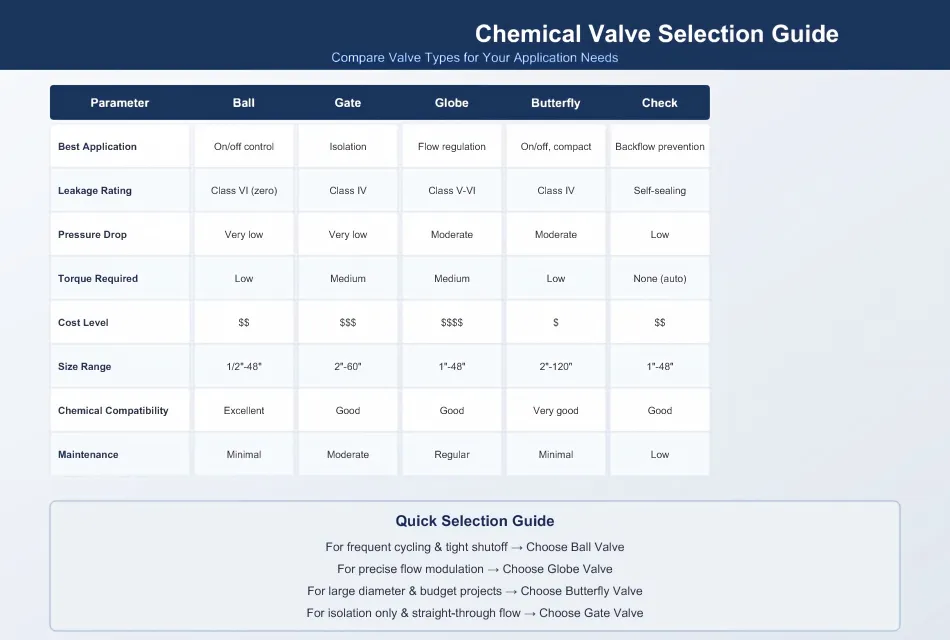
Figure 8: Chemical valve selection guide for matching valve types to applications
6. Industry Standards and Compliance for Chemical Valves
Chemical industry valves must comply with numerous international standards to ensure safety, reliability, and interchangeability. Key standards include:
- API 598 - Valve inspection and testing
- API 6D - Pipeline and piping valves
- ASME B16.34 - Valve flanged, threaded, and welding end
- ISO 15848 - Fugitive emissions testing for process valves
- EN 12266 - Pressure testing of valves
- PED 2014/68/EU - Pressure Equipment Directive (European market)
- ATEX - Equipment for explosive atmospheres
- SEMI F28 - Semiconductor chemical valve requirements
| XDV Valve Compliance: All our chemical industry valves are manufactured and tested in accordance with international standards including API, ASME, ISO, EN, and GB standards. We provide full material traceability, test certificates, and compliance documentation for every valve supplied. |
7. Valve Testing for Chemical Industry Applications
Rigorous testing is essential to ensure chemical valves perform reliably under demanding conditions. Standard testing procedures include:
- Shell strength test - Hydrostatic test at 1.5x rated pressure
- Seat leakage test - Low and high-pressure seat leakage verification per API 598/ISO 15848
- Fugitive emissions test - Stem leakage measurement for environmental compliance
- Cycle testing - Minimum 10-50 cycles to verify operational reliability
- Fire-safe testing - API 607 / ISO 10497 for combustible chemical services
- Low-temperature testing - Cryogenic service valve verification
8. Valve Maintenance Best Practices in Chemical Plants
Proper maintenance extends valve life and prevents unplanned downtime in chemical processing facilities:
- Regular inspection - Schedule visual and functional checks per OEM recommendations
- Lubrication - Apply appropriate lubricants to stem threads and bushings
- Seat and seal monitoring - Track leakage rates and replace seals proactively
- Corrosion monitoring - Inspect external coatings and internal linings periodically
- Actuator calibration - Verify positioner accuracy and travel limits
- Spare parts inventory - Maintain critical spare seals, gaskets, and bellows assemblies
| Safety Warning: Always isolate and depressurize chemical pipelines before performing valve maintenance. Follow lockout/tagout (LOTO) procedures and ensure proper purging of residual chemicals. Consult the chemical safety data sheet (SDS) for the specific process media. |
9. Conclusion: Choosing the Right Chemical Valve Partner
The chemical industry demands valves that combine exceptional corrosion resistance, reliable sealing, precise flow control, and uncompromising safety. From ball valves and gate valves to globe valves, butterfly valves, check valves, and specialty lined or bellows seal valves, each type serves a unique role in chemical processing systems.
Successful valve selection requires a thorough understanding of chemical compatibility, operating conditions, industry standards, and lifecycle costs. Partnering with an experienced valve manufacturer like XDV Valve ensures you receive valves specifically engineered for your chemical application, backed by technical expertise, rigorous testing, and global supply chain support.
Whether you need standard chemical valves or custom-engineered solutions for the most aggressive process conditions, XDV Valve provides comprehensive valve products and expert technical support to keep your chemical plant operating safely and efficiently.
Need Chemical Industry Valves?Contact our technical team for valve selection consultation, material compatibility guidance, and competitive quotations on chemical-grade ball valves, gate valves, globe valves, butterfly valves, and specialty valves. |
10. Frequently Asked Questions (FAQ)
