
 España
Sulfuric Acid Diluter Guide: Safe H2SO4 Dilution Systems & Safety
Sulfuric Acid Diluter: Complete Guide to Safe and Efficient H2SO4 Dilution Systems
Master the chemistry, safety protocols, material selection, and process control needed for industrial sulfuric acid dilution operations.
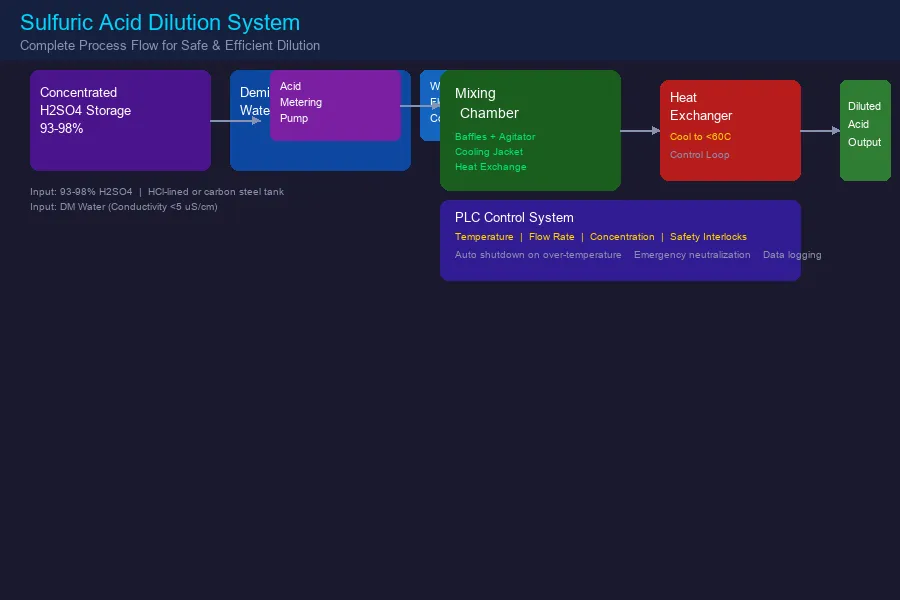
Figure 1: Sulfuric acid dilution system complete process flow
1. What Is a Sulfuric Acid Diluter?
A sulfuric acid diluter is a specialized system designed to safely reduce the concentration of concentrated sulfuric acid (typically 93-98% H2SO4) by controlled mixing with water or other solvents. This process is fundamental across countless industrial operations, from battery manufacturing to mineral processing, and requires careful attention to chemistry, engineering, and safety.
Sulfuric acid is one of the most widely produced chemicals globally, with over 200 million tons manufactured annually. However, most industrial processes require sulfuric acid at concentrations significantly lower than the concentrated form. A properly designed sulfuric acid dilution system ensures that this transition from concentrated to diluted acid occurs safely, efficiently, and with consistent product quality.
At its core, a sulfuric acid diluter integrates storage, metering, mixing, cooling, and control elements into a coordinated system. Whether you are working with batch processing in a laboratory setting or continuous inline dilution in a large-scale industrial plant, understanding the principles behind effective acid dilution is essential for operational safety and process efficiency.
2. The Chemistry of Sulfuric Acid Dilution
Understanding the underlying chemistry of sulfuric acid dilution is fundamental to designing safe and effective systems. Sulfuric acid (H2SO4) is a strong diprotic acid that dissociates in two steps when dissolved in water, releasing substantial amounts of energy in the process.
2.1 Heat of Dilution
The dilution of sulfuric acid is one of the most exothermic processes encountered in industrial chemistry. The heat released depends on the initial concentration, target concentration, and the temperature at which dilution occurs.
| Initial Concentration | Target | Heat Released (kJ/kg) | Temp Rise (C) |
|---|---|---|---|
| 98% H2SO4 | 70% H2SO4 | 880 | ~85 |
| 93% H2SO4 | 50% H2SO4 | 720 | ~70 |
| 98% H2SO4 | 93% H2SO4 | 120 | ~12 |
| 70% H2SO4 | 10% H2SO4 | 450 | ~45 |
| 50% H2SO4 | 5% H2SO4 | 310 | ~35 |
Table 1: Heat of dilution values for various concentration transitions
2.2 Concentration-Dependent Properties
The physical and chemical properties of sulfuric acid change dramatically with concentration, directly impacting material selection, process design, and safety considerations for any sulfuric acid diluter system.
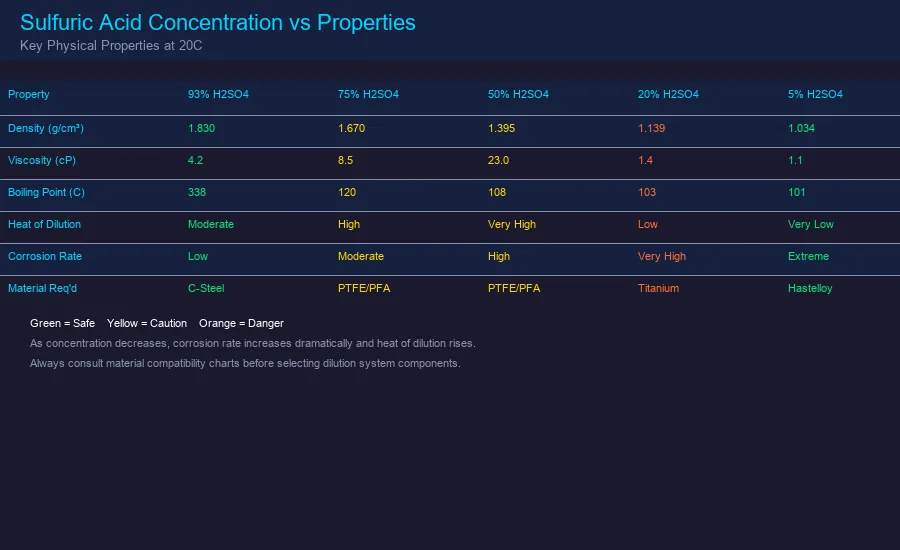
Figure 2: Sulfuric acid concentration vs. key physical properties at 20C
| Property | 93% | 75% | 50% | 20% | 5% |
|---|---|---|---|---|---|
| Density (g/cm3) | 1.830 | 1.670 | 1.395 | 1.139 | 1.034 |
| Viscosity (cP) | 4.2 | 8.5 | 23.0 | 1.4 | 1.1 |
| Boiling Point (C) | 338 | 120 | 108 | 103 | 101 |
| Corrosion (mmp/yr) | 0.1 | 2.5 | 50 | 500 | 2000 |
Table 2: Key properties of sulfuric acid at different concentrations
2.3 Reaction Mechanism
The dilution of sulfuric acid involves two sequential dissociation reactions:
- First dissociation (complete): H2SO4 H2O -> H3O HSO4- (fully dissociated)
- Second dissociation (partial): HSO4- H2O -> H3O SO42- (equilibrium)
The first reaction releases approximately -95.3 kJ/mol, responsible for the majority of the heat of dilution.
3. Sulfuric Acid Diluter System Design
A well-designed sulfuric acid diluter system integrates storage, metering, mixing, cooling, and control elements to produce consistently concentrated acid safely and efficiently.
3.1 Core System Components
Every sulfuric acid dilution system consists of several key components working in concert:
- Concentrated acid storage: Tank or drum storage for 93-98% H2SO4, typically carbon steel vessels for concentrated acid due to passivation
- Water supply: Deionized or distilled water reservoir with quality monitoring
- Dosing system: Precision metering pumps or controlled flow devices for acid feed regulation
- Mixing chamber: Engineered vessel with baffles, agitation, and heat exchange for controlled dilution
- Temperature control: Cooling jackets, heat exchangers, or external cooling loops to manage exothermic heat
- Concentration monitoring: Densitometers, refractometers, or online pH/conductivity sensors
- Control system: PLC-based automation with interlocks for safe automated operation
- Safety systems: Emergency neutralization, spill containment, ventilation, and personal protection
3.2 Dilution Methods and Approaches
Several approaches exist for sulfuric acid dilution, each suited to different production scales:
| Method | Scale | Control Precision | Typical Application |
|---|---|---|---|
| Batch dilution | Small to medium | Good ( /- 1%) | Lab, batch chemical processing |
| Continuous inline dilution | Medium to large | Excellent ( /- 0.2%) | Continuous production |
| Gravity-fed dilution | Small | Fair ( /- 2%) | Low-volume installations |
| Pump-mediated dilution | Any scale | Very good ( /- 0.5%) | Industrial batch and continuous |
Table 3: Comparison of sulfuric acid dilution methods
Batch dilution involves charging a specific volume of water into a mixing vessel, then adding the required quantity of concentrated acid. This method is simple and flexible but requires shutdown between batches and carries higher operator exposure risk.
Continuous inline dilution uses metered pumps to feed both concentrated acid and water into a mixing chamber, producing a continuous stream of diluted acid at the target concentration.
3.3 Mixing Chamber Design
The mixing chamber is the heart of any sulfuric acid diluter. Proper design ensures complete mixing, effective heat dissipation, and safe operation:
- Baffle design: Internal baffles create turbulence for rapid and uniform mixing
- Agitation: Mechanical agitators ensure homogenous mixing throughout the vessel
- Heat removal: Cooling jackets, internal coils, or external heat exchangers remove the heat of dilution
- Acid introduction point: The acid feed should enter below the water level for immediate submersion
- Ventilation: The chamber must be vented to handle acid mist and vapor
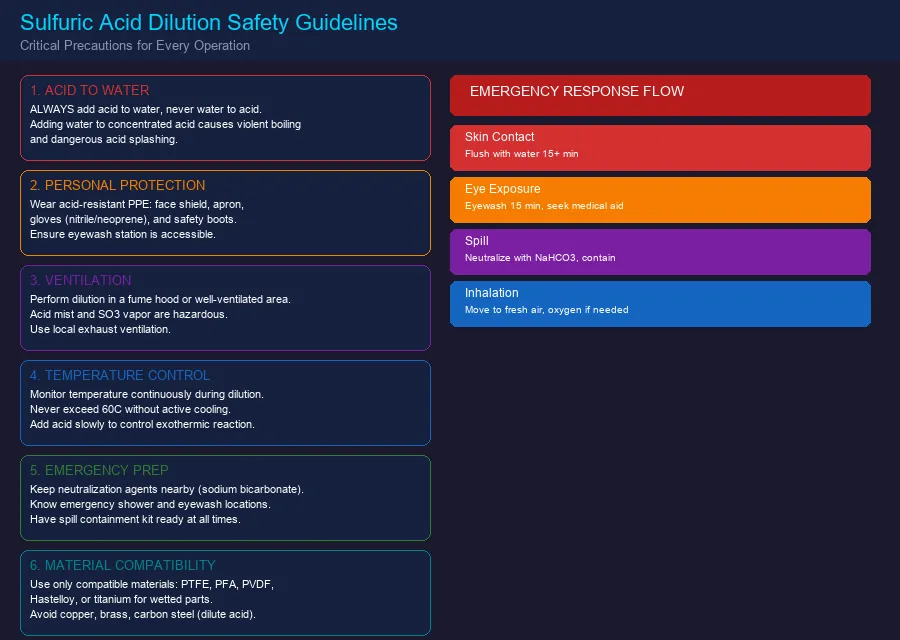
Figure 3: Sulfuric acid dilution safety guidelines and best practices
4. Material Compatibility Considerations
Material selection is one of the most critical aspects of sulfuric acid diluter design. The corrosion behavior of sulfuric acid is unique among common industrial acids due to its concentration-dependent passivation characteristics.
4.1 Corrosion Rate by Material and Concentration
| Material | 93-98% H2SO4 | 75% H2SO4 | 50% H2SO4 | 20% H2SO4 | 5% H2SO4 |
|---|---|---|---|---|---|
| Carbon Steel | Excellent (<0.1 mmp/yr) | Poor (10 mmp/yr) | Very Poor (>500 mmp/yr) | Very Poor (>2000 mmp/yr) | Very Poor (>5000 mmp/yr) |
| PTFE (Teflon) | Excellent | Excellent | Excellent | Excellent | Excellent |
| PFA | Excellent | Excellent | Excellent | Excellent | Excellent |
| ETFE (Halar) | Excellent | Excellent | Excellent | Good | Good |
| PVDF | Good | Good | Good | Fair | Poor |
| Hastelloy C-276 | Excellent | Excellent | Excellent | Excellent | Excellent |
| Titanium | Excellent | Excellent | Good | Good | Fair |
| SS 316L | Fair | Poor | Very Poor | Very Poor | Very Poor |
| Rubber (Hard) | Good | Fair | Poor | Poor | Poor |
Table 4: Corrosion rates of common materials in sulfuric acid at various concentrations
4.2 Gasket and Seal Materials
Sealing components in a sulfuric acid dilution system require special attention. Common gasket and seal materials and their performance:
- PTFE gaskets: Universal compatibility across all concentrations and temperatures up to 200C
- FFKM (Viton FG): Excellent for concentrated acid, good for dilute up to 150C
- EPDM: Poor compatibility with sulfuric acid at any concentration
- Nitrile (NBR): Unsuitable for sulfuric acid service
- Graphite: Good for concentrated acid, poor for dilute (capillary action draws acid in)
5. Safety Critical: Best Practices
Safety must be the overriding concern in any sulfuric acid dilution operation. The combination of highly corrosive chemicals, exothermic reactions, and potential for violent splashing makes proper safety protocols absolutely essential.
5.1 The Golden Rule: Acid to Water
The single most important safety rule in sulfuric acid dilution is:
When water is added to concentrated sulfuric acid, the water (which is less dense) floats on top of the acid. The intense heat of dilution is concentrated at the interface, causing the water to boil instantaneously. This produces a violent eruption of boiling acid that can cause severe burns and damage to equipment and facilities.
When acid is added to water, the acid (being denser) sinks and mixes gradually. The large volume of water absorbs and distributes the heat of dilution, preventing localized boiling and splash hazards. This principle applies to all concentrated acids, but is especially critical for sulfuric acid due to its extremely high heat of dilution.
5.2 Engineering Controls
Modern sulfuric acid diluter systems incorporate multiple layers of engineering controls:
- Remote operation: All acid handling should be performed remotely where possible, minimizing operator exposure
- Emergency shower and eyewash: Required within 10 seconds of the dilution area, tested weekly
- Local exhaust ventilation: Fume extraction at the mixing point to capture acid mist and vapor
- Spill containment: Secondary containment vessels and acid-resistant flooring with curbing
- Neutralization systems: Sodium bicarbonate or calcium carbonate neutralization stations adjacent to the dilution area
- Automated shutdown: Temperature, pressure, and flow interlocks that automatically shut down the system if parameters exceed safe limits
5.3 Personal Protective Equipment (PPE)
Minimum PPE requirements for sulfuric acid dilution operations:
- Face shield: Full-face shield with acid-resistant coating, worn in addition to safety glasses
- Acid-resistant apron: Neoprene or PVC apron covering the torso and legs
- Chemical-resistant gloves: Nitrile (minimum 0.5mm) or neoprene gloves, inspected before each use
- Safety boots: Chemical-resistant boots with steel toe and acid-resistant sole
- Respiratory protection: Full-face respirator with acid gas cartridges if ventilation is inadequate
6. Process Control and Automation
Modern sulfuric acid diluter systems rely on sophisticated process control to ensure consistent product quality and operational safety. Automation reduces human error, improves reproducibility, and provides critical safety interlocks.
6.1 Key Control Parameters
| Parameter | Typical Range | Control Method | Alarm Threshold |
|---|---|---|---|
| Acid flow rate | 0.1-500 L/min | Coriolis meter control valve | /- 5% of setpoint |
| Water flow rate | 0.5-1000 L/min | Magnetic flow meter control valve | /- 2% of setpoint |
| Mixing chamber temperature | 20-60C | RTD sensor cooling valve | High: 65C, Low: 15C |
| Output concentration | 5-90% H2SO4 | Densitometer or refractometer | /- 0.5% of target |
| pH of output | 0.5-3.0 | pH electrode (high-acid tolerant) | Outside 0.5-4.0 range |
Table 5: Typical control parameters for sulfuric acid dilution systems
6.2 Safety Interlock System
A properly designed sulfuric acid diluter incorporates multiple safety interlocks that automatically activate when parameters exceed safe limits:
- High temperature interlock: Automatically shuts off acid feed and opens emergency cooling if temperature exceeds 65C
- Low flow interlock: Shuts down the system if water flow drops below the minimum required for safe dilution
- Over-concentration interlock: Diverts off-spec product to neutralization if concentration exceeds the upper limit
- Mixing failure interlock: Shuts down acid feed if the agitator fails or mixing chamber level is too low
- Emergency neutralization: Automatically activates sodium bicarbonate dosing if a spill or overflow is detected
7. Industrial Applications
Sulfuric acid dilution systems serve a wide range of industrial applications. Understanding these applications helps in designing the appropriate dilution system for each specific need.
| Industry | Typical Concentration | Application | Volume Requirement |
|---|---|---|---|
| Lead-acid battery manufacturing | 31-37% H2SO4 | Electrolyte preparation | Continuous, high volume |
| Mineral processing | 5-30% H2SO4 | Copper, uranium, and rare earth leaching | Continuous, variable |
| Petroleum refining | Various | Alkylation, acid washing, pH control | Bath to continuous |
| Fertilizer production | Various | Phosphate rock processing, DAP/MAP production | Continuous, high volume |
| Chemical synthesis | 5-50% H2SO4 | Catalyst, intermediate, pH adjuster | Bath to continuous |
| Water treatment | 1-10% H2SO4 | pH adjustment, neutralization | Bath to continuous |
| Metal pickling | 5-20% H2SO4 | Scale removal from steel surfaces | Continuous bath |
| Laboratory analysis | Varies | Titration, sample digestion | Small batch |
Table 6: Major industrial applications of diluted sulfuric acid
8. Common Problems and Solutions
Even well-designed sulfuric acid diluter systems can encounter operational challenges. Here are common problems and their solutions:
| Problem | Root Cause | Solution |
|---|---|---|
| Temperature exceeds safe limit | Inadequate cooling capacity, too-fast acid addition | Reduce acid feed rate, increase cooling water flow, install additional heat exchange surface |
| Inconsistent product concentration | Flow meter drift, poor mixing, temperature variation | Calibrate meters regularly, improve mixing chamber design, compensate for temperature effects on density |
| Corrosion leaks in dilute acid section | Wrong material selection, temperature excursions | Upgrade to PTFE-lined or Hastelloy construction, install temperature interlocks |
| Acid mist generation | Excessive turbulence, high temperature, inadequate ventilation | Reduce agitation speed, improve cooling, install mist eliminators and exhaust ventilation |
| Crystal formation in lines | Temperature drop below saturation point | Insulate and heat-trace all acid-containing lines, maintain minimum temperature |
| Seal and gasket degradation | Chemical incompatibility, temperature cycling | Upgrade to PTFE or FFKM seals, reduce thermal cycling where possible |
Table 7: Common sulfuric acid dilution problems and their solutions
9. Frequently Asked Questions
What is a sulfuric acid diluter?A sulfuric acid diluter is a system or piece of equipment designed to safely reduce the concentration of concentrated sulfuric acid (typically 93-98%) by mixing it with water or another solvent to achieve a desired lower concentration for industrial or laboratory use. |
Why must acid always be added to water, never water to acid?Adding water to concentrated sulfuric acid causes an extremely violent exothermic reaction. The water floats on the dense acid, boils instantly, and splashes concentrated acid everywhere. Adding acid to water allows the heat to dissipate gradually because the large volume of water absorbs the energy safely.
|
What is the heat of dilution for sulfuric acid?The heat of dilution for sulfuric acid is approximately 880 kJ/kg when diluting 98% acid to 70%. This is a highly exothermic reaction that can raise temperatures above 100C if not properly controlled, causing boiling and acid mist release. |
What materials are compatible with sulfuric acid dilution systems?For concentrated sulfuric acid (93-98%), carbon steel is suitable due to passivation. For dilute sulfuric acid, PTFE-lined, PFA-lined, PVDF, Hastelloy C-276, titanium, and rubber-lined vessels are commonly used. Material selection depends critically on concentration and temperature.
|
What is the maximum safe temperature for sulfuric acid dilution?The maximum safe temperature for sulfuric acid dilution is typically 60C. Above this temperature, acid mist generation increases significantly, material compatibility degrades, and the risk of boiling and violent splashing rises. Active cooling is required to maintain temperatures below this threshold. |
How is sulfuric acid concentration measured during dilution?Concentration is measured using densitometers (density-based), refractometers (refractive index), online pH/conductivity sensors, or laboratory titration. Continuous monitoring with feedback control ensures the target concentration is achieved and maintained. |
What are the common applications of diluted sulfuric acid?Diluted sulfuric acid is used in battery manufacturing (lead-acid batteries), mineral processing and hydrometallurgy, petroleum refining, fertilizer production (phosphate fertilizers), chemical synthesis, water treatment, metal pickling, and laboratory analytical procedures. |
10. Conclusion
A properly designed sulfuric acid diluter system is essential for any industrial operation that requires diluted sulfuric acid. From the fundamental chemistry of the exothermic dilution reaction to the critical importance of material compatibility and safety protocols, every aspect of the system must be carefully engineered to ensure safe, efficient, and consistent operation.
The key takeaways from this guide are:
- Safety first: The acid-to-water rule is non-negotiable. Always add acid to water, never the reverse.
- Material selection is critical: Carbon steel for concentrated acid, PTFE/PFA/Hastelloy for dilute acid. The transition zone between 70-85% requires special engineering attention.
- Heat management is essential: The heat of dilution can raise temperatures above 100C. Active cooling and temperature monitoring are mandatory.
- Automation improves safety: PLC-based control with interlocks reduces human error and provides automatic protection against hazardous conditions.
- Continuous monitoring ensures quality: Densitometers and refractometers provide real-time concentration data for consistent product quality.
Need Expert Guidance on Sulfuric Acid Handling?The XDV Valve Technical Team has extensive experience designing and supplying valves and systems for aggressive chemical service, including sulfuric acid applications. Contact us for expert advice on material selection, system design, and safety best practices. Contact Our Technical Team |
