
 España
Advantages & Disadvantages of Various Valves: Complete Comparison Guide
1. Introduction: Why Valve Selection Matters
Selecting the right valve for your industrial application is one of the most critical decisions in piping system design. An improper valve choice can lead to leakage, safety hazards, increased maintenance costs, reduced system efficiency, premature equipment failure, and non-compliance with industry standards.
At XDV Valve (Wenzhou Xuanda Import and Export Trading Co., Ltd.), we manufacture and supply a wide range of industrial valves including ball valves, gate valves, globe valves, butterfly valves, plug valves, check valves, cryogenic valves, bellow seal valves, on-off valves, lined valves, and special valves. Each type has unique advantages and limitations depending on the application.
This comprehensive guide compares the advantages and disadvantages of each valve type to help engineers, procurement specialists, and plant managers make informed decisions.
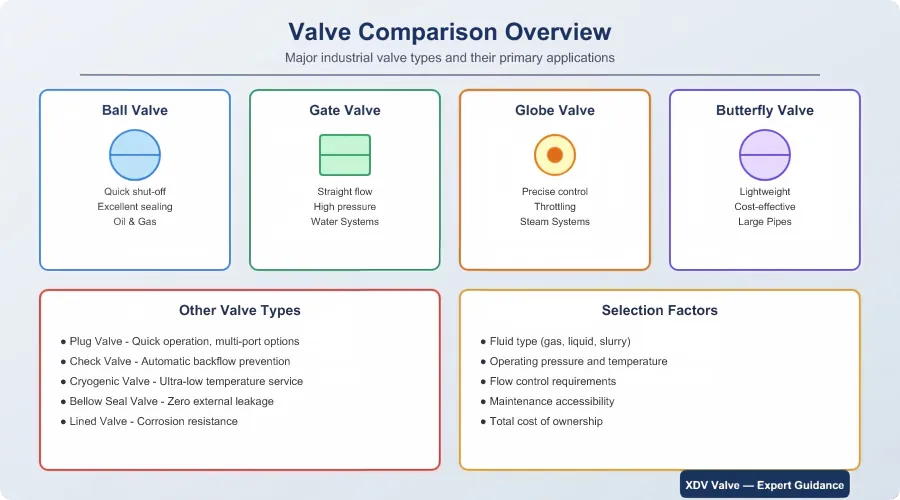
Figure 1: Overview of major industrial valve types and their primary applications.
2. Ball Valves
Ball valves use a spherical disc with a hole through the center to control flow. When the hole aligns with the flow path, the valve is open; when rotated 90 degrees, it closes.
Advantages
| Benefit | Explanation |
|---|---|
| Quick shut-off | 90-degree quarter-turn operation for fast response |
| Excellent sealing | Tight shut-off with minimal leakage (Grade 1 per API 598) |
| Low pressure drop | Full bore design allows unrestricted flow |
| Durable | Long service life with minimal maintenance |
| Versatile | Suitable for gases, liquids, slurries, and corrosive media |
| Compact design | Smaller footprint than gate or globe valves |
Disadvantages
| Limitation | Explanation |
|---|---|
| Not for throttling | Partial opening can cause erosion and seat damage |
| Water hammer risk | Rapid closure can create pressure surges |
| Limited temperature range | Standard seats (PTFE) rated to ~200C; special materials needed for higher temps |
| Higher initial cost | More expensive than gate or butterfly valves |
Best Applications
- Oil and gas pipelines
- Chemical processing
- Water treatment systems
- LNG and cryogenic services
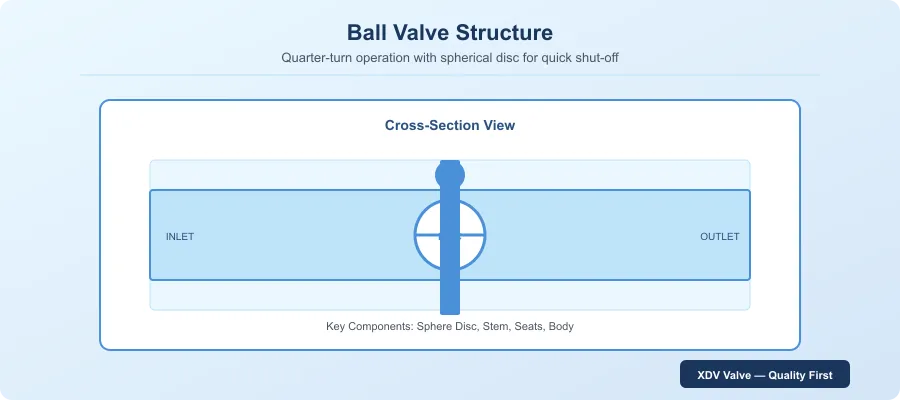
Figure 2: Ball valve internal structure showing key components and flow paths.
3. Gate Valves
Gate valves operate by raising or lowering a gate (disc) perpendicular to the flow path. They are designed for fully open or fully closed positions, not for flow regulation.
Advantages
| Benefit | Explanation |
|---|---|
| Straight-through flow | Minimal pressure drop when fully open |
| Bi-directional sealing | Works equally well in either flow direction |
| Robust construction | Suitable for high-pressure, high-temperature applications |
| Long service life | Fewer moving parts means less wear |
| Cost-effective | Generally lower cost than ball valves for large sizes |
Disadvantages
| Limitation | Explanation |
|---|---|
| Slow operation | Requires multiple turns to open/close fully |
| Not for throttling | Partial opening causes vibration and erosion |
| Large footprint | Requires more installation space (rising stem types) |
| Seat wear | Sealing surfaces can degrade over time |
Best Applications
- Water distribution systems
- Oil and gas transmission pipelines
- Power plant cooling systems
- Steam isolation services
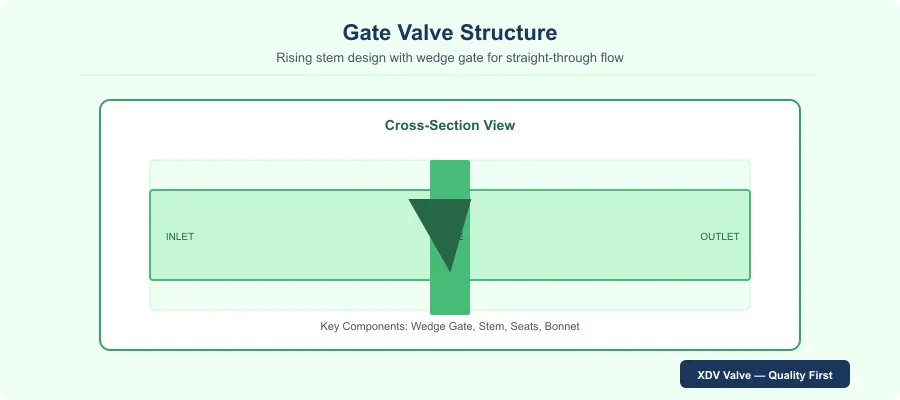
Figure 3: Gate valve internal structure showing wedge gate and straight-through flow path.
4. Globe Valves
Globe valves use a movable disc (plug) and a stationary ring seat to regulate flow. The flow path changes direction through the valve body, creating natural throttling capability.
Advantages
| Benefit | Explanation |
|---|---|
| Excellent throttling | Precise flow control with linear characteristic |
| Good shutoff | Tight sealing when fully closed |
| Easy maintenance | Removable bonnet allows seat/disc replacement |
| Backseat feature | Some designs allow packing replacement under pressure |
| High pressure rating | Suitable for high-pressure services |
Disadvantages
| Limitation | Explanation |
|---|---|
| High pressure drop | Flow path change creates significant resistance |
| Slower operation | Requires multiple turns to open/close |
| Larger size | Bulky compared to ball valves for same capacity |
| Flow direction sensitive | Must be installed with correct flow direction |
Best Applications
- Flow regulation and throttling
- Cooling water systems
- Boiler feed water control
- Steam control services
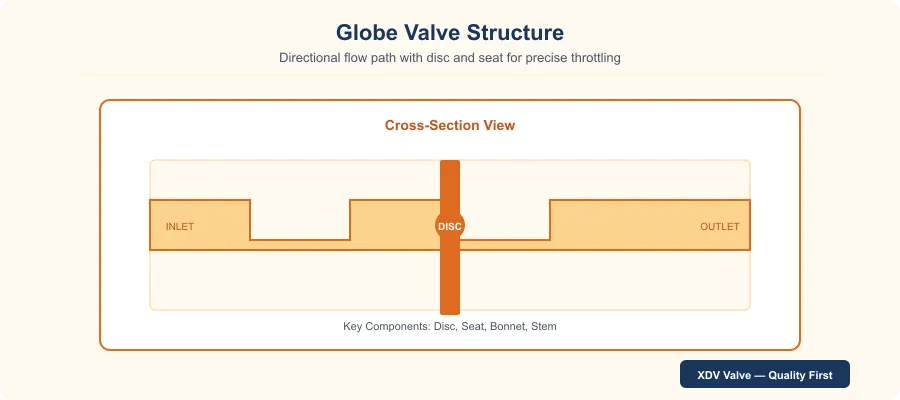
Figure 4: Globe valve internal structure showing disc, seat, and flow path for precise throttling.
5. Butterfly Valves
Butterfly valves use a rotating disc mounted on a shaft to control flow. The disc rotates 90 degrees from fully open to fully closed position.
Advantages
| Benefit | Explanation |
|---|---|
| Lightweight | Much lighter than gate or globe valves of same size |
| Compact design | Small footprint, ideal for space-constrained installations |
| Fast operation | Quarter-turn operation for quick open/close |
| Cost-effective | Lower cost, especially for large diameter pipes |
| Low pressure drop | Minimal flow resistance when fully open |
Disadvantages
| Limitation | Explanation |
|---|---|
| Limited pressure rating | Generally suitable for pressures up to Class 300 |
| Seat wear | Rubber seats can degrade over time, causing leakage |
| Disc interference | Disc remains in flow path even when open |
| Temperature limitations | Standard seats limited to ~120C; special materials needed for higher temps |
Best Applications
- Water and wastewater treatment
- HVAC systems
- Fire protection systems
- Large diameter pipeline isolation
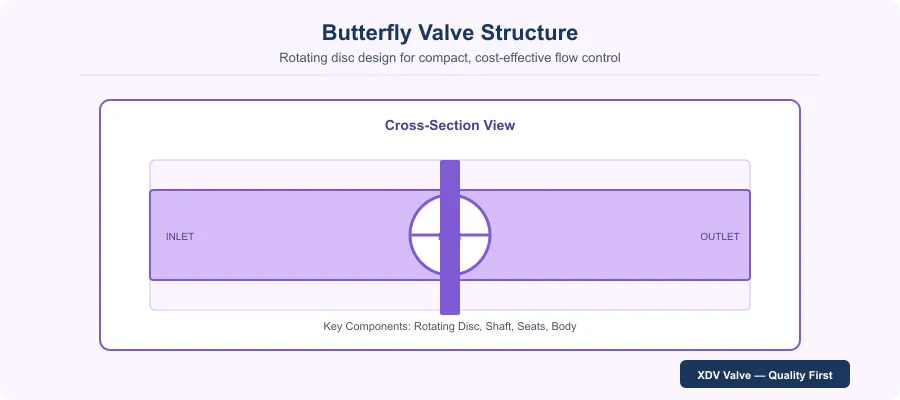
Figure 5: Butterfly valve internal structure showing rotating disc and compact design.
6. Plug Valves
Plug valves use a tapered or cylindrical plug with a bore that rotates 90 degrees to control flow. They are similar to ball valves but use a plug instead of a sphere.
Advantages
- Quick operation - Quarter-turn for fast open/close
- Good sealing - Tapered design provides tight shut-off
- Low pressure drop - Full bore design allows unrestricted flow
- Simple construction - Fewer parts than gate or globe valves
- Multi-port options - Available in L-port and T-port configurations for diversion
Disadvantages
- Stiction issues - Plug can stick if not lubricated regularly
- Maintenance intensive - Lubricated plug valves require regular grease injection
- Limited size range - Generally available up to 16 inches
- Not for throttling - Similar to ball valves, not suitable for flow control
Best Applications
- Oil and gas industry
- Chemical processing
- Slurry services (with appropriate design)
- Diversion and mixing services (multi-port)
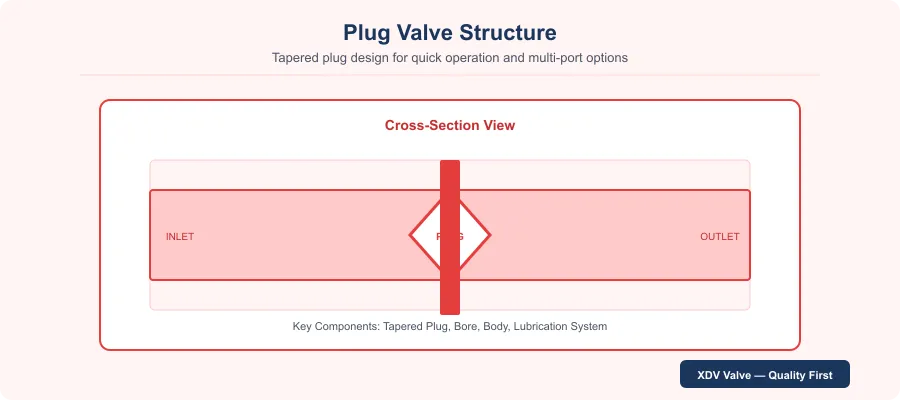
Figure 6: Plug valve internal structure showing tapered plug and bore configuration.
7. Check Valves
Check valves (non-return valves) allow flow in one direction only and automatically prevent reverse flow. Common types include swing check, lift check, dual plate, and piston check valves.
Advantages
- Automatic operation - No external actuation required
- Prevents backflow - Protects equipment from reverse flow damage
- Simple design - Fewer moving parts than manually operated valves
- Low maintenance - Generally require minimal servicing
- Cost-effective - Lower cost than manually operated valves for same function
Disadvantages
- No flow control - Cannot regulate flow rate
- Water hammer risk - Sudden closure can cause pressure surges
- Installation sensitive - Must be installed in correct orientation
- Cracking pressure - Requires minimum flow to open (swing type)
Best Applications
- Pump discharge protection
- Condensate return lines
- Compressor systems
- Heat exchanger protection
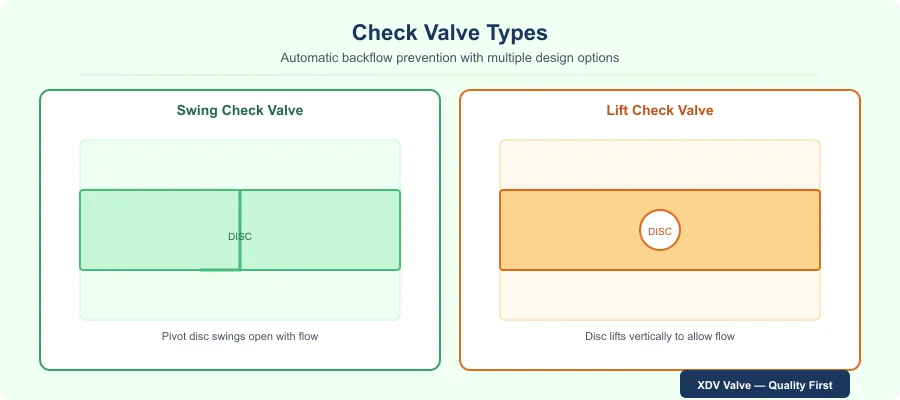
Figure 7: Comparison of different check valve types and their operating mechanisms.
8. Cryogenic Valves
Cryogenic valves are specially designed for ultra-low temperature services (typically below -100C / -148F). They feature extended bonnets to protect packing from cold.
Advantages
- Ultra-low temp rated - Designed for LNG, liquid nitrogen, oxygen, and other cryogenic fluids
- Extended bonnet - Protects stem packing from extreme cold
- Leak-free design - Special sealing systems prevent external leakage
- Material integrity - Constructed from materials that remain ductile at low temperatures
- Safety focused - Designed to prevent freeze-up and embrittlement
Disadvantages
- High cost - Significantly more expensive than standard valves
- Limited availability - Fewer manufacturers produce cryogenic-rated valves
- Specialized installation - Requires trained personnel for proper installation
- Maintenance complexity - Special tools and procedures needed for servicing
Best Applications
- LNG processing and transportation
- Liquid oxygen/nitrogen/argon systems
- Petrochemical cryogenic separation
- Aerospace fuel systems
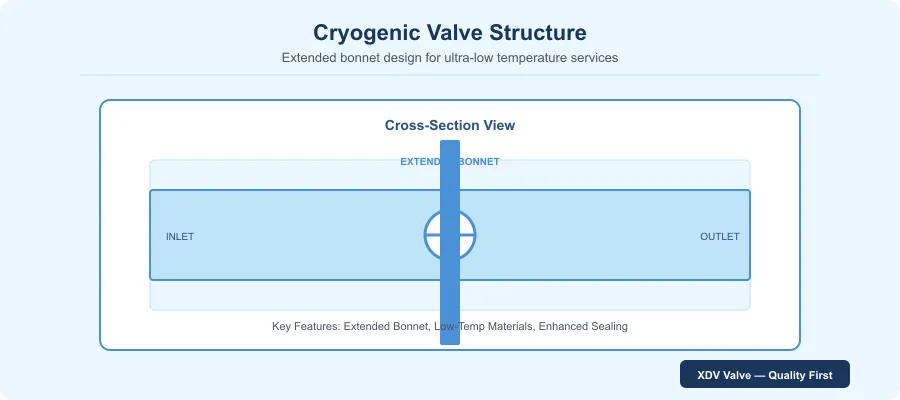
Figure 8: Cryogenic valve internal structure showing extended bonnet and low-temperature design features.
9. Quick Comparison Table
The following table provides a quick reference for comparing the key characteristics of each valve type:
| Valve Type | Cost | Flow Control | Pressure Rating | Temperature Range | Maintenance | Best For |
|---|---|---|---|---|---|---|
| Ball | Medium-High | Poor | High | Wide | Low | On/Off, Quick Shut-off |
| Gate | Low-Medium | None | Very High | Wide | Low | Isolation, Straight Flow |
| Globe | Medium-High | Excellent | Very High | Wide | Medium | Throttling, Flow Regulation |
| Butterfly | Low | Fair | Low-Medium | Limited | Low | Large Diameter, Cost-Sensitive |
| Plug | Medium | Poor | Medium-High | Limited | Medium | On/Off, Diversion |
| Check | Low-Medium | None | Medium-High | Wide | Low | Backflow Prevention |
| Cryogenic | Very High | Poor | High | Ultra-Low | Medium | LNG, Cryogenic Fluids |
| Bellow Seal | Very High | Fair | Medium-High | Limited | Low | Toxic Media, Zero Leakage |
| Lined | Medium-High | Poor | Medium | Limited | Medium | Corrosive Media |
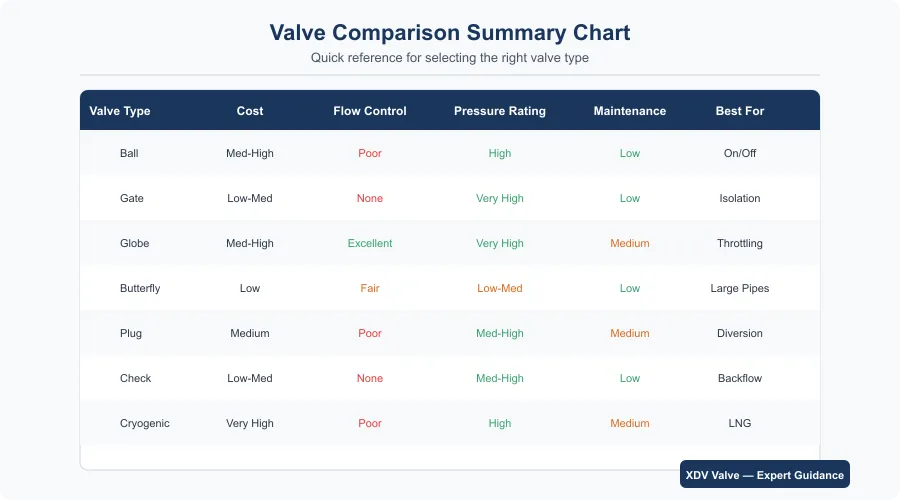
Figure 9: Comprehensive comparison chart of all major valve types across key performance metrics.
10. FAQ: Frequently Asked Questions
Ball valves are generally the best choice for on/off service due to their quick quarter-turn operation, excellent sealing, and low maintenance requirements. Gate valves are also suitable for isolation but operate more slowly.
Yes, butterfly valves can be used for throttling, though they are not as precise as globe valves. Soft-seated butterfly valves provide good shut-off, while metal-seated types offer better durability for abrasive services.
The main difference is in their flow control capability. Gate valves are designed for on/off service only with minimal pressure drop when open. Globe valves excel at throttling and flow regulation but create higher pressure drop.
Use a bellow seal valve when handling toxic, hazardous, or environmentally sensitive media where external leakage must be eliminated. Common applications include chlorine handling, fluorine gas, and pharmaceutical manufacturing.
Yes, cryogenic valves feature extended bonnets to protect stem packing from extreme cold, specialized materials that remain ductile at ultra-low temperatures, and enhanced sealing systems to prevent external leakage in cryogenic conditions.
Choose a ball valve for general on/off service with quick operation and excellent sealing. Choose a plug valve for services involving slurries or when multi-port diversion capability is needed.
Valve lifespan varies widely: Ball valves 15-20 years, Gate valves 10-15 years, Globe valves 10-15 years, Butterfly valves 10-20 years, Cryogenic valves 15-25 years, Bellow seal valves 5-10 years (limited by bellows fatigue).
No. Standard valves are not designed for ultra-low temperatures and may suffer from material embrittlement, packing failure, external leakage, and operational difficulties. Always use valves specifically rated and designed for cryogenic service.
Need Help Choosing the Right Valve?
Our engineering team can help you select the optimal valve for your specific application. Get a free consultation today. Email Us for a Free Quote |
Contact our team today at sales@xuanda.com for valve selection guidance or product inquiries.
