
 España
Types and Functions of Valve Packing
Valve packings come in various types, each suitable for different operating conditions. Proper selection of packing can increase the service life of valves.
Some commonly used valve packing types and their functions are introduced below:
I.Compression Packing
(1) Plant Fiber Packing
Made from hemp or cotton impregnated with oil, wax, or other impermeable materials, used in low-pressure valves below 100℃. Suitable for media such as water and ammonia.
(2) Asbestos Fiber Packing
Asbestos fiber has good heat resistance, can withstand weak acids and strong alkalis, has high strength, and good adsorption properties.
(3) Rubber Packing
Including rubber-reinforced cloth, rubber rods, and ring-shaped rubber packings, used in media such as ammonia and concentrated sulfuric acid at temperatures ≤140℃.
(4) Carbon Fiber Packing
Carbon fiber packing is made by impregnating carbon fiber braided rope with polytetrafluoroethylene emulsion. Carbon fiber packing has excellent elasticity; it possesses superior self-lubricating properties and high-temperature resistance, and can operate stably in air within a temperature range of -120 to 350℃, with a pressure resistance ≤35MPa.
(5) Flexible Graphite Packing
Flexible graphite packing is widely used in valves and has the following excellent properties:
① Unique flexibility and resilience; when made into notched packing, it can be freely bent axially by more than 90°, and will not leak due to temperature and pressure changes, vibration, or other factors during use, thus ensuring safety and reliability, making it an ideal sealing material.
② Good temperature resistance. It can be used at low temperatures down to -200℃, up to 500℃ in high-temperature oxidizing media, and up to 2000℃ in non-oxidizing media, while maintaining excellent sealing performance.
③ Strong corrosion resistance. It has good corrosion resistance to acids, alkalis, organic solvents, organic gases, and vapors. It does not age or deteriorate, and is resistant to corrosion from all media except strong oxidizing media (nitric acid), fuming sulfuric acid, chromic acid, and halogens.
④ Low coefficient of friction and good self-lubricating properties.
⑤ Excellent impermeability to gases and liquids.
⑥ Long service life and reusable.
Flexible graphite is widely used in petroleum, chemical, power generation, fertilizer, pharmaceutical, papermaking, machinery, metallurgy, aerospace, and atomic energy industries. Flexible graphite packings can generally be pressed into shape. Applicable nominal pressure ≤32MPa.
(6) Metal Packings
According to their structure, they can be divided into metal foil strip wound packings, metal foil crepe stacked packings, metal corrugated packings, lead wire twisted packings, and lead ring packings. Metal foil strip wound packings and metal foil crepe stacked packings have the advantages of high temperature resistance, erosion resistance, wear resistance, high strength, and good thermal conductivity. However, their sealing performance is relatively poor, requiring a relatively high clamping force, and they must be used in conjunction with plastic packings. Its operating temperature, pressure, and corrosion resistance depend on the metal material.
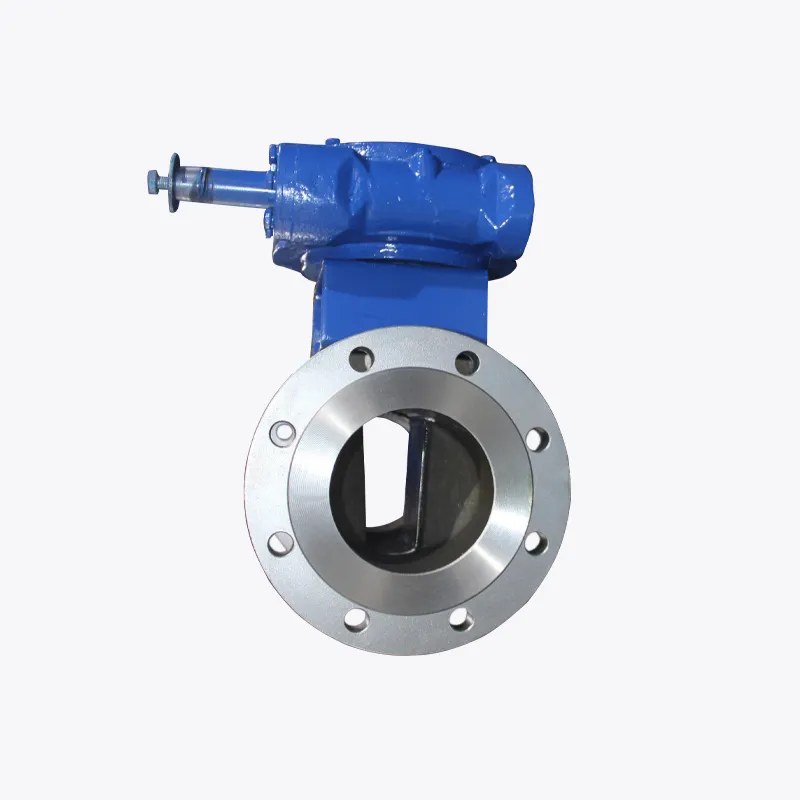
II.V-type Packing
V-type packing consists of upper, middle, and lower packing. The upper and middle packings are made of polytetrafluoroethylene (PTFE) or nylon, while the lower packing is made of materials such as 1Cr13, 1Cr18Ni9, and A3 steel. PTFE has a temperature resistance of 232℃, nylon has a temperature resistance of 93℃, and generally withstands a pressure of 32MPa, commonly used in corrosive media.
III. O-ring Packing
O-rings have a circular cross-section and are made of rubber, PTFE, or hollow metal. O-rings are used not only for static seals but also for dynamic seals. Rubber O-rings are the most widely used. The maximum operating pressure of O-rings can reach 40MPa.
